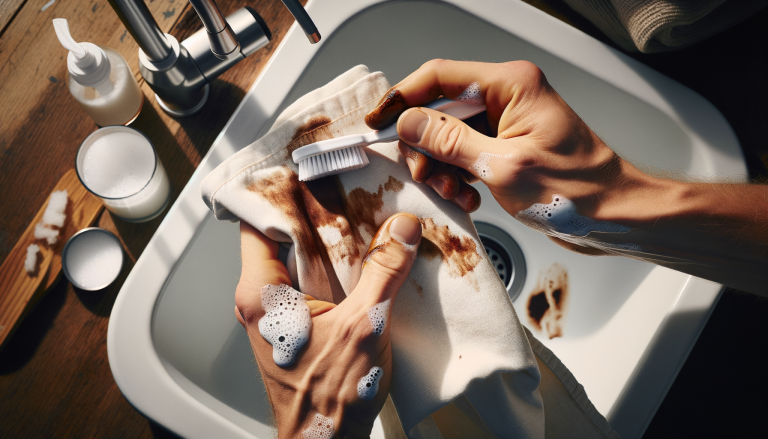
Blood stains are one of the most urgent laundry emergencies — the faster you act, the easier they come out. Fresh blood rinses away with cold water. Dry blood requires more effort, but it’s rarely permanent if you use the right approach.
This guide covers exactly how to remove blood stains from clothes, whether the stain is seconds old or dried in from a wash cycle you missed.
The Most Important Rule: Always Use Cold Water
Blood contains proteins. Hot water cooks those proteins and bonds them permanently to fabric fibres — the same way cooking turns raw meat firm. This is the single most common mistake people make with blood stains, and it’s why so many of them become permanent.
Cold water only. Always. This applies to rinsing, soaking, and washing until the stain is completely gone.
How to Remove Fresh Blood Stains from Clothes
Step 1: Rinse Immediately with Cold Water
As soon as you notice the blood stain, hold the fabric under cold running water. Run water through the back of the fabric, pushing the blood out rather than through. For a very fresh stain — seconds to a couple of minutes old — cold water alone will often remove most or all of it.
Step 2: Apply Hydrogen Peroxide (for white or light fabrics)
Pour a small amount of 3% hydrogen peroxide (standard pharmacy strength) directly onto the stain. It will fizz and bubble — this is the peroxide reacting with the proteins in the blood. Let it fizz for 2–3 minutes, then blot with a clean cloth. Rinse with cold water.
Important: Test hydrogen peroxide on a hidden area of the fabric first. It can lighten or bleach coloured fabrics. For dark or brightly coloured clothes, use the dish soap method below instead.
Step 2 (alternative): Apply Dish Soap for Coloured Fabrics
Apply a small amount of liquid dish soap to the stain and work it in gently with your fingers or a soft brush. Let it sit for 5 minutes, then rinse thoroughly with cold water. Dish soap breaks down the protein-based stain without the bleaching risk of peroxide.
Step 3: Check and Repeat if Needed
Check whether the stain is gone before moving to the next step. If colour remains, repeat the treatment. Don’t move on to washing until the stain is either gone or significantly faded.
Step 4: Wash in Cold Water
Wash the garment in cold water with your regular laundry detergent. Check the care label — most fabrics are fine on a cold cycle.
Step 5: Air Dry and Inspect
Air dry the garment and inspect the stain in good light before using the dryer. If any stain remains, treat again before heat sets it permanently.
How to Remove Dried Blood Stains from Clothes
Dried blood is harder to remove but not impossible, especially if it hasn’t been through the dryer. The goal is to rehydrate the dried proteins and then lift them out.
Step 1: Soak in Cold Salt Water
Mix 1 tablespoon of salt per cup of cold water. Submerge the stained area and soak for 30–60 minutes. Salt draws moisture and helps break down dried protein. This is especially effective on thicker fabric like denim or cotton towels where blood has penetrated deeply.
Step 2: Apply Hydrogen Peroxide or an Enzyme Cleaner
After soaking, apply hydrogen peroxide (on white/light fabrics) or an enzyme-based stain remover. Enzyme cleaners — the same type used for pet stains — are particularly effective on protein-based stains like blood. Apply, let sit for 15–20 minutes, then blot and rinse with cold water.
Step 3: Scrub Gently with Dish Soap
Apply dish soap to the remaining stain and scrub lightly with a soft toothbrush. The mechanical action helps lift protein fibres that have bonded to the fabric.
Step 4: Wash Cold and Air Dry
Wash in cold water and air dry. For stubborn old stains, you may need to repeat the full process two or three times. Each treatment lifts more of the stain.
Fabric-Specific Tips
Cotton and linen
The most forgiving. Cold water, hydrogen peroxide (test first), and dish soap all work well. For white cotton, a short soak in diluted hydrogen peroxide is very effective.
Denim
Cold salt water soak followed by dish soap and a toothbrush scrub is very effective on denim. Wash in cold water; never hot.
Wool and silk
Cold water rinse immediately. Avoid hydrogen peroxide on these fabrics — use a tiny drop of mild dish soap worked in very gently, then rinse. Hand wash only; no scrubbing.
Synthetic fabrics (polyester, nylon, spandex)
Cold water and dish soap work well. Be cautious with hydrogen peroxide — test first, as it can affect synthetic dyes.
Upholstery and mattresses
Blot (don’t rub) with cold water immediately. Apply hydrogen peroxide to white fabrics or a paste of baking soda and cold water to coloured upholstery. Let dry, then vacuum off the residue. For mattresses, avoid soaking — use a damp cloth rather than pouring liquid.
Frequently Asked Questions
Does saliva help remove blood stains?
This is an old folk remedy that actually has some basis in science — saliva contains enzymes (amylase) that can break down proteins. It’s most effective on very small, very fresh stains and only practical on your own clothing for hygiene reasons. For anything significant, use the methods above.
I washed and dried the garment. Is the stain permanent?
Dryer heat makes blood stains very difficult but not always impossible to remove. Try the cold salt water soak followed by an enzyme cleaner, and repeat several times. Some stains can still be lifted even after heat exposure, though it requires more effort and patience.
Will baking soda help with blood stains?
A paste of baking soda and cold water can be effective for lighter blood stains — apply it, let it dry, then brush off and rinse. It’s gentler than hydrogen peroxide and safe on most coloured fabrics. For darker or set stains, combine it with dish soap or an enzyme cleaner for better results.
What about old blood stains on bedding?
Soak the stained area in cold water with an enzyme laundry detergent for several hours before washing. Add a cup of white vinegar to the wash cycle (cold water). Repeat if needed. Avoid hot water at every stage.
Final Thoughts
Blood stains are urgent — speed matters more than the specific method you use. Get to cold water immediately, avoid heat at every stage, and check before the dryer. Fresh stains often come out with nothing more than cold water and dish soap. The key is what you don’t do: no hot water, no dryer until the stain is gone.